

AI Chatbots and Automation: Practical Use Cases for Growing Businesses
RPS Code Admin8/12/2026
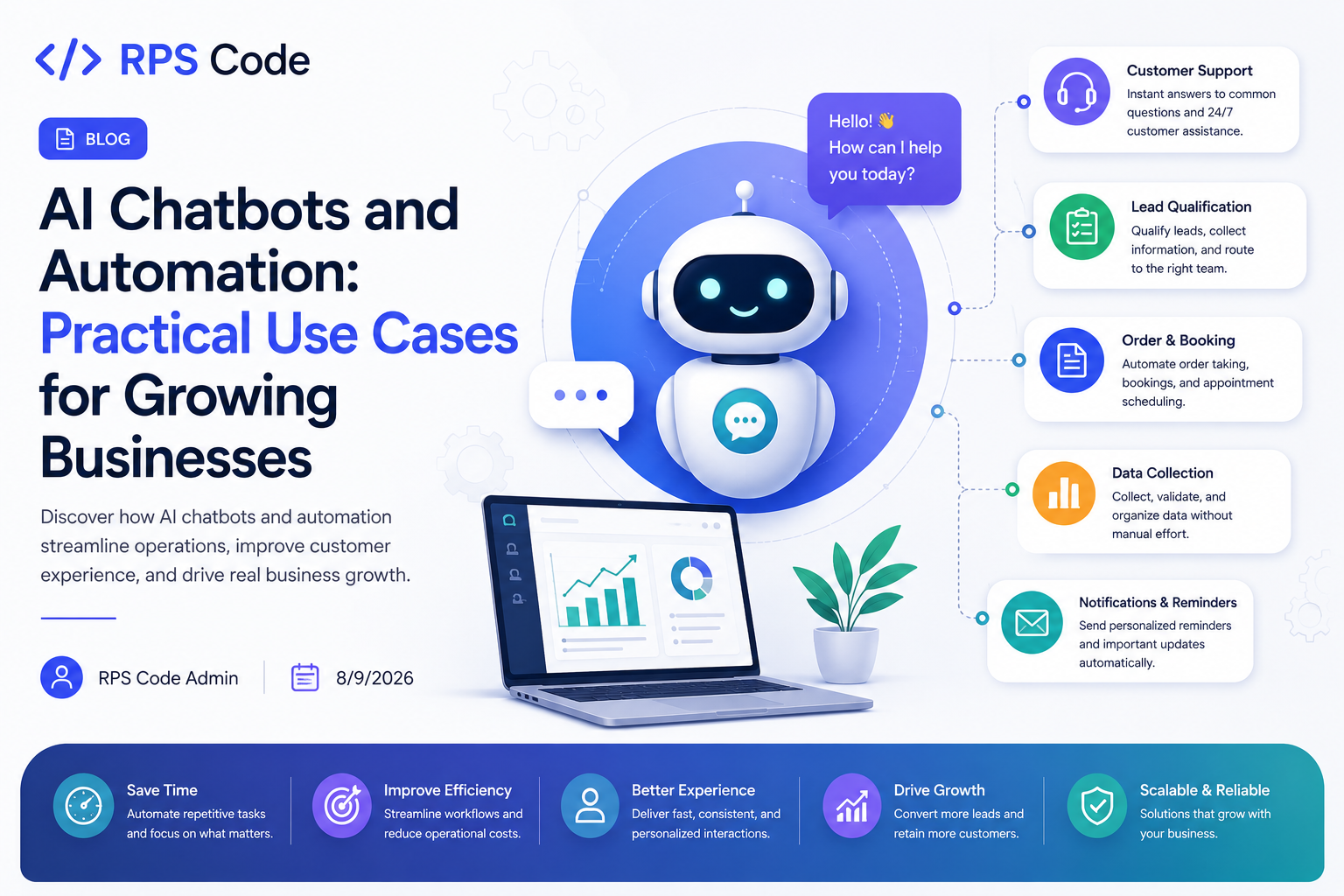
AI chatbots and workflow automation get pitched as a solution to almost everything, which makes it hard to tell where they genuinely help. In practice, they tend to pay off in a narrow set of well-defined situations.
Customer support is the most common starting point. A chatbot that can answer frequently asked questions, route complex issues to a human, or collect initial information before a support ticket is created reduces response times without replacing the support team — it filters the repetitive requests so people can focus on the ones that actually need judgment.
Internal automation is often the higher-value, lower-visibility win. Automatically generating reports, syncing data between systems, sending status notifications, or flagging anomalies in submitted data are all tasks that don't need a human in the loop every time — but they're exactly the kind of thing that quietly consumes hours every week when done manually.
Document and data processing is another strong fit: extracting structured data from forms, verifying submitted information against rules, or classifying incoming requests. These are pattern-matching tasks well suited to automation, especially when paired with clear validation rules rather than fully autonomous decision-making.
Where chatbots and automation tend to underdeliver is when they're asked to make judgment calls with real consequences. The most durable automation projects keep a human in the loop wherever the stakes are high, and reserve full automation for the repetitive, low-risk, high-volume work where it actually saves time.